
The problem: prices and reports both lag behavior
Carbon prices matter, but prices are not the whole market. By the time a price movement is obvious, the behavior behind it was often already visible somewhere else: in retirement activity, buyer patterns, beneficiary data, project categories, vintages, and developer trends.
Sustainability reports describe strategy; prices show where the market has already moved. Neither tells you what buyers are doing right now. A team planning next year’s offsetting strategy, a trader watching demand form, or an investor testing a thesis all need the same missing layer: observed behavior, at market scale, close to real time.
What you get: the market’s actual behavior, refreshed weekly
Carbon Insights translates registry-level retirement activity into a clear view of market movement: which credit types are being retired, which sectors and beneficiaries are active, which project developers are gaining traction, which geographies and technologies are attracting demand, whether activity is broad-based or concentrated, and how all of it is changing over time.
That scale is what turns anecdote into analysis. A statement like "nature-based credits are gaining momentum" stops being a talking point and becomes a checkable question: retired by whom, where, in what volumes, and across which projects, refreshed weekly.
Who it’s for
- Corporate sustainability teams benchmarking their offsetting strategy against sector peers, so decisions reflect how similar organizations actually act, not just how programs are described.
- Traders and brokers looking for early signals on where demand is forming and where liquidity may tighten, before it is fully priced.
- Investors and analysts testing whether observed market activity supports an investment thesis or contradicts it.
- Procurement teams planning purchases around where supply is likely to become more competitive.
- Communications and disclosure teams reviewing planned public claims against registry evidence before publication, so the numbers in a report match the record.
What you can do with it
Size the market and see where demand is concentrating in Market Overview. Check whether any single project is behaving normally for its technology and country in Project View. Look up what a company has actually retired in Positioning. Then set your peers side by side in Competitive Analysis and see who is still buying and who has gone quiet.
- Peer benchmarking: see what comparable organizations are retiring, in which categories and volumes, and how that behavior changes over time.
- Demand monitoring: track whether activity is shifting toward specific project types, geographies, developers, or vintages, weeks before it shows in headline prices.
- Pre-publication review: check a planned climate claim against actual registry activity before it goes into a sustainability report or press release.
- Procurement planning: use retirement behavior to anticipate where demand is concentrating and time purchases accordingly.
- Market research: support analyst notes, trading views, and investment theses with observed transaction data rather than commentary.
Why behavioral data beats market commentary
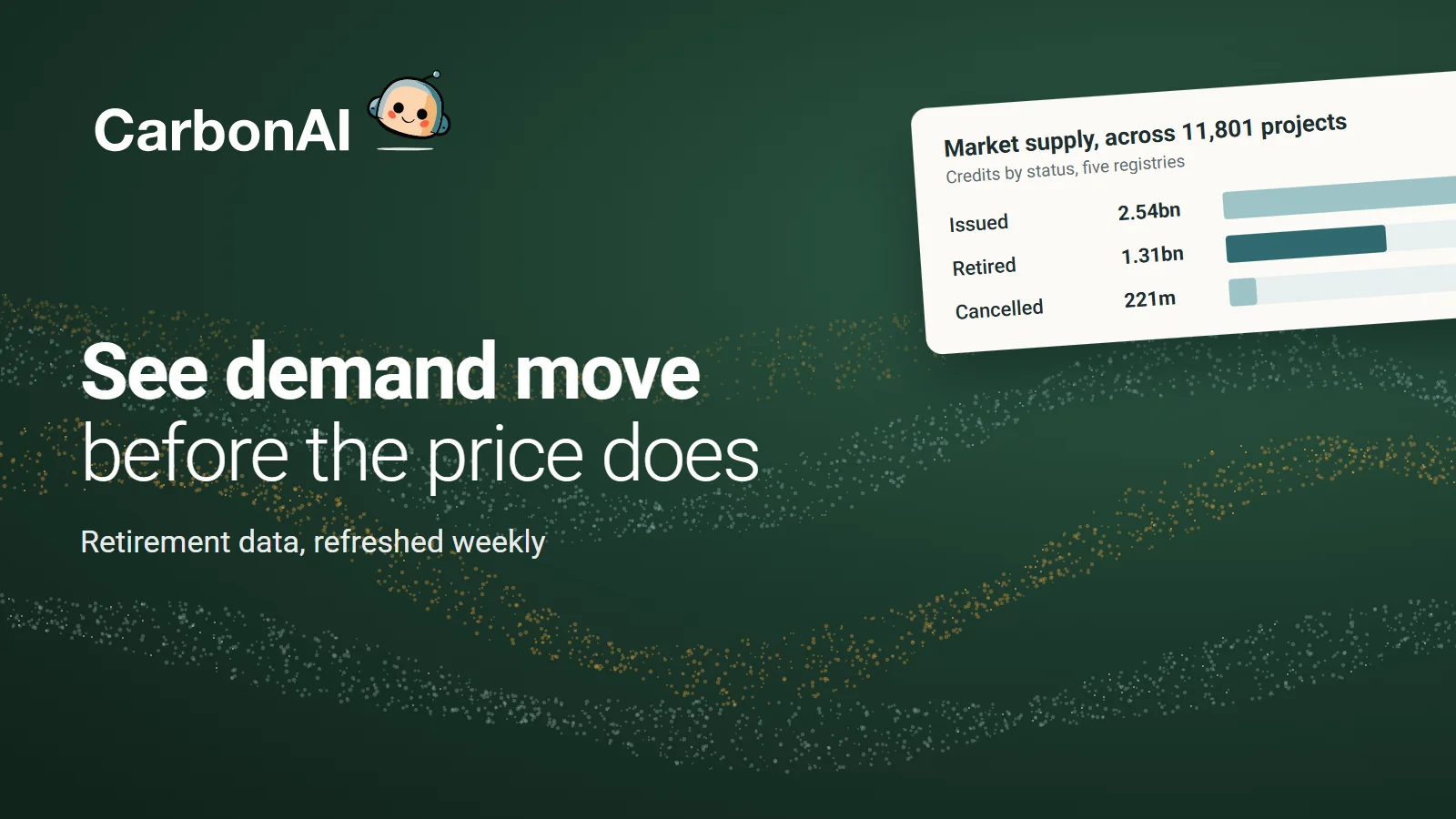
Market commentary summarizes what people are saying. Carbon Insights is built on what the market is recording: more than 1.31 billion credits retired across 545,896 registry records, spanning roughly 90,000 beneficiaries and 3,000 project developers, refreshed weekly. A retirement record is a matter of registry fact, which makes it a firmer foundation for a decision than any summary of sentiment.
Retirement data doesn’t answer every question on its own, and it works best alongside CarbonAI’s Project Ratings, country and SDG context, and independent review. What it adds is the sharpest possible starting point: what the market is doing, not just what the market is saying.
Find out where carbon demand is actually moving. Explore Carbon Insights in CarbonAI Monitor.